10 Workplace Tools Every Growing Business Needs in 2026
Businesses rarely fail because employees aren’t willing to work hard. They fail because information gets scattered, responsibilities remain unclear, conversations go undocumented, and teams operate without proper visibility.
A missed customer request.
An undocumented decision from a meeting.
A follow-up lost in a WhatsApp group.
An instruction that no one can find.
These small communication breakdowns compound into major operational problems. As businesses scale, informal tools stop working. You need proper systems that drive collaboration, accountability, institutional knowledge, and consistent execution.
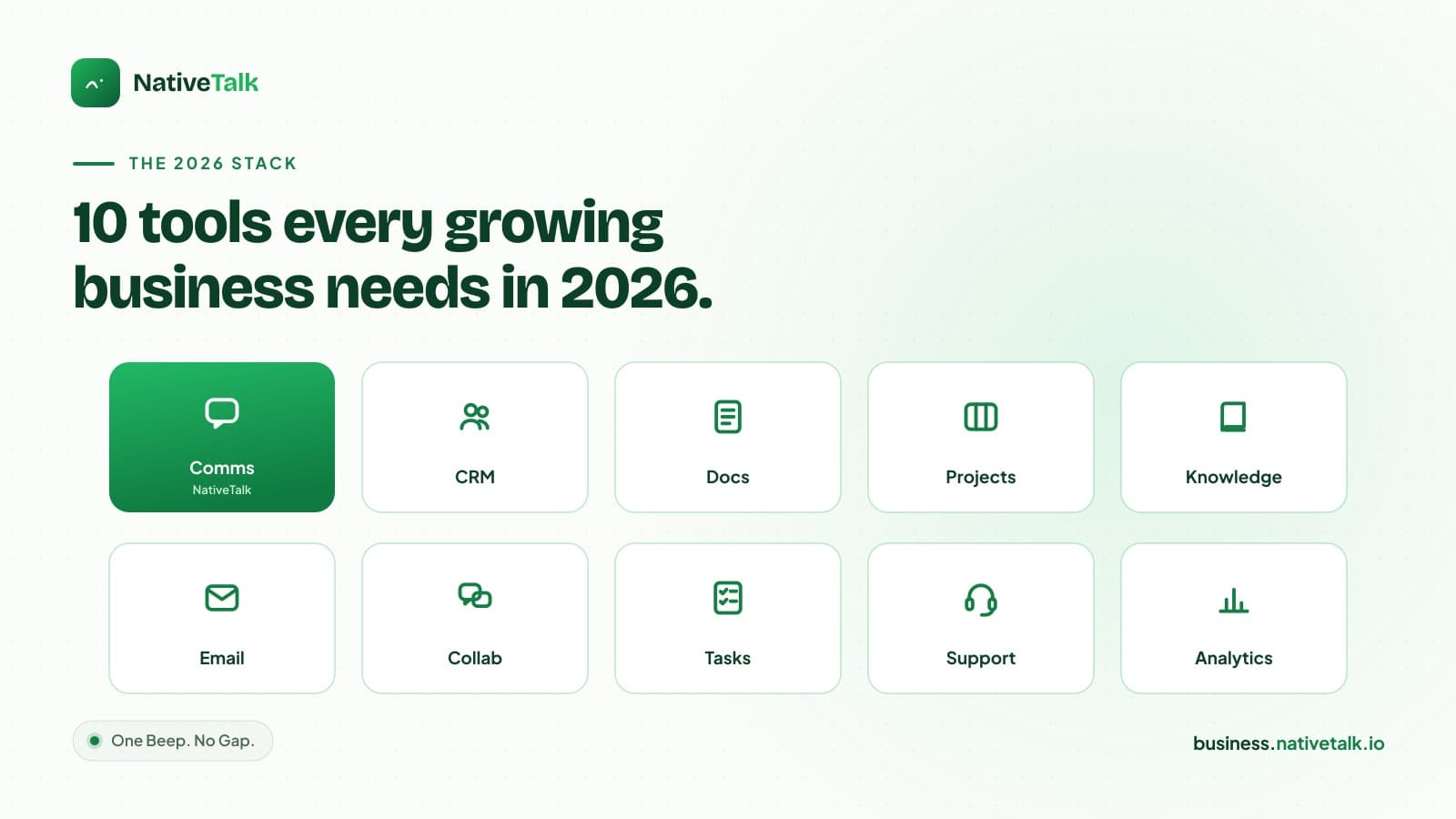
Here are 10 essential workplace tools every growing business should implement:
1. Business Communication Platform
Communication is the lifeblood of every organization, yet it often happens across disconnected channels — email, WhatsApp, calls, social media, and personal devices.
A dedicated business communication platform brings everything into one unified environment for customer interactions, internal discussions, and official records.
Why It Matters
- Provides full visibility and context
- Reduces silos and misunderstandings
- Strengthens accountability
- Preserves conversation history
- Improves customer experience
2. Customer Relationship Management (CRM) Software
Customer data should never live only in employees' inboxes or personal phones. A CRM creates a single source of truth for all customer interactions, sales pipelines, support tickets, and relationship history.
Why It Matters
- Boosts customer retention
- Streamlines sales processes
- Enhances service quality
- Improves team visibility into customer relationships
3. Meeting Notes & Documentation Tools
Meetings consume hours, but without proper documentation, decisions evaporate and responsibilities become ambiguous.
Documentation tools capture discussions, action items, deadlines, and outcomes.
Why It Matters
- Eliminates misunderstandings
- Creates organizational memory
- Drives accountability and follow-through
4. Project Management Software
Projects fail when teams lose sight of who is responsible for what and by when. Project management tools bring clarity to tasks, timelines, dependencies, and progress.
Why It Matters
- Reduces missed deadlines
- Improves execution and efficiency
- Enhances cross-team collaboration
5. Shared Knowledge Base
Institutional knowledge walks out the door every time an employee leaves. A knowledge base centralizes processes, policies, customer insights, and best practices.
Why It Matters
- Speeds up onboarding
- Reduces reliance on individuals
- Ensures operational consistency and continuity
6. Official Business Email System
Using personal email for business creates security, credibility, and continuity risks. A professional business email system establishes a reliable, branded communication channel.
Why It Matters
- Builds professionalism and trust
- Creates auditable records
- Strengthens brand perception
7. Team Collaboration Tools
Modern teams — especially remote or hybrid ones — need dedicated spaces for real-time communication, document sharing, and coordination.
Why It Matters
- Reduces delays and email overload
- Supports transparent teamwork
- Improves productivity in distributed environments
8. Internal Task Management System
Knowing what needs to be done is different from ensuring it gets done. Task management systems help teams prioritize, assign, track, and complete work efficiently.
Why It Matters
- Increases accountability
- Closes execution gaps
- Supports performance visibility
9. Customer Support Management Platform
Customer service directly affects retention and revenue. Support platforms help teams track tickets, manage escalations, and deliver consistent service.
Why It Matters
- Reduces customer churn
- Speeds up issue resolution
- Builds service accountability
10. Communication Analytics & Reporting Tools
You measure sales and finances, but few businesses measure communication effectiveness. Analytics tools track response times, engagement, bottlenecks, and team activity.
Why It Matters
- Identifies inefficiencies
- Supports data-driven improvements
- Enhances overall customer experience
Why WhatsApp Alone Is Not Enough
WhatsApp is great for quick chats, but it was never built to run a business. Relying on it for customer communication and internal coordination leads to lost messages, poor visibility, weak accountability, difficult handovers, and knowledge loss when employees leave.
It supports speed. It does not provide governance.
The Future of Productivity Is Visibility
Top-performing organizations don’t just add more productivity tools — they focus on communication visibility. When teams can easily access information, track conversations, document decisions, and collaborate in one place, productivity rises naturally.
How NativeTalk Powers Better Workplace Communication
NativeTalk was designed to solve the fragmented communication problem many growing businesses face. It unifies customer conversations (WhatsApp, calls, email, social), internal team collaboration, task management, and records into one secure, centralized platform.
With NativeTalk, organizations can:
- Maintain complete communication history and context
- Improve team visibility and accountability
- Deliver consistent, professional customer experiences
- Preserve knowledge during staff changes
- Reduce operational risk and miscommunication
Communication is no longer a weakness — it becomes strategic infrastructure.
Productivity is rarely a people problem.
More often, it’s a visibility problem.
The businesses that treat communication as a system — not an afterthought — consistently outperform those that don’t.
Ready to bring clarity, accountability, and efficiency to your team? Centralized communication is the foundation.
