Can AI Improve Customer Service Without Losing the Human Touch?
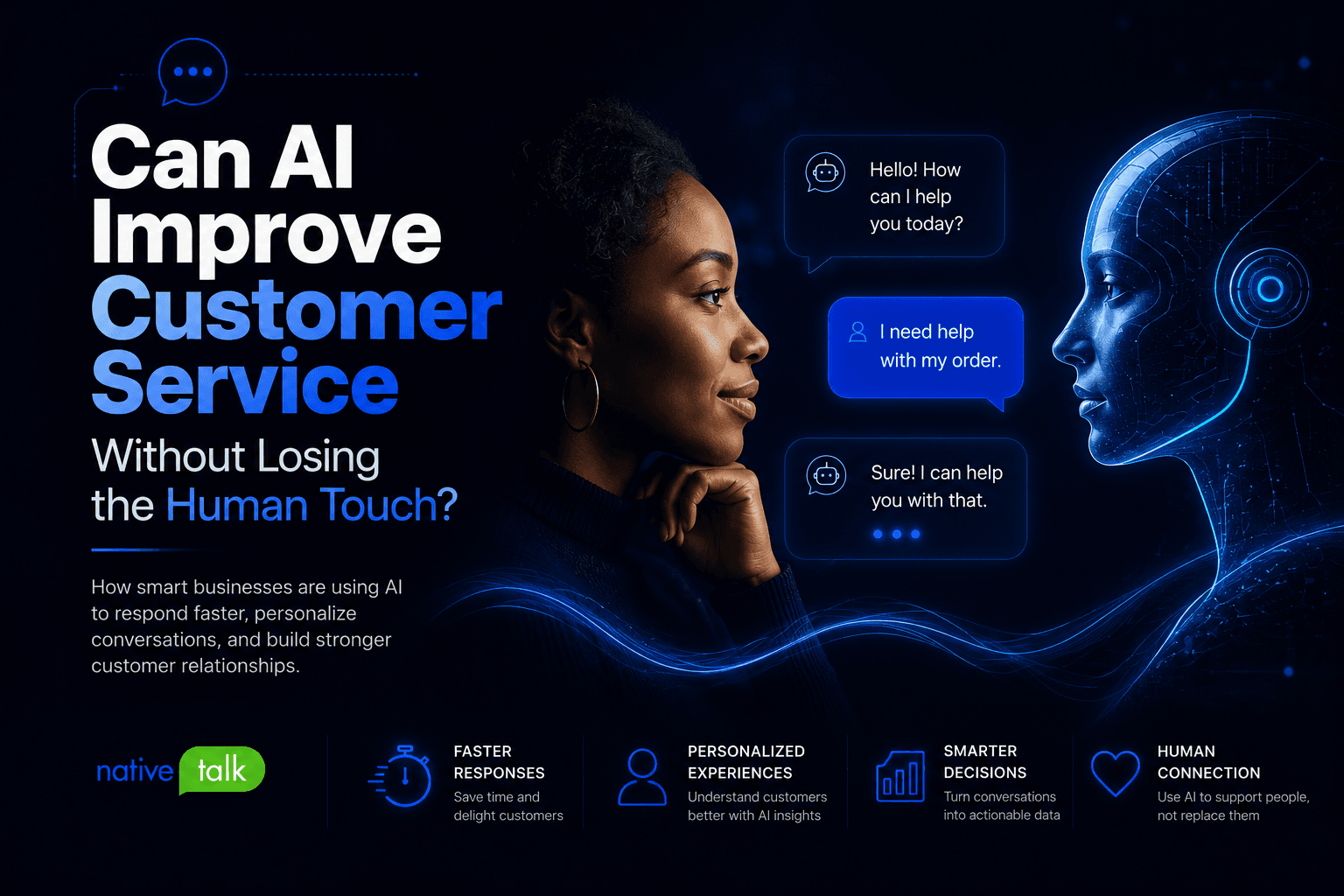
Artificial intelligence has become one of the most talked-about technologies in business.
For some, it's the future of customer service.
For others, it's a risk that could make businesses feel cold and impersonal.
The truth lies somewhere in between.
Customers don't expect businesses to replace people with AI.
They expect businesses to make communication faster, easier, and more reliable.
When AI is used well, it doesn't replace human conversations. It improves them.
The Real Problem Isn't AI
Most customer frustrations don't come from interacting with AI.
They come from poor communication.
Messages go unanswered.
Customers wait hours for simple responses.
Support teams ask the same questions repeatedly because they can't see previous conversations.
Sales enquiries are forgotten because no one followed up.
These problems existed long before AI entered the conversation.
Technology didn't create them.
Technology has the potential to solve them.
Customers Value Speed
Imagine sending a message to a business about pricing.
You receive no response for six hours.
Now imagine another business acknowledges your message immediately, lets you know your request has been received, and promises that a team member will respond shortly.
The second experience feels better, even if the final answer comes from a person.
Customers appreciate responsiveness.
They want reassurance that someone is paying attention.
This is where AI delivers value.
AI Should Handle the Routine
Every business receives questions that are asked repeatedly.
"What are your business hours?"
"Where are you located?"
"How much does delivery cost?"
"Do you offer this service?"
These questions don't always require a team member to respond manually.
AI can provide quick, accurate answers while allowing employees to focus on conversations that require judgment, empathy, or problem-solving.
Instead of replacing people, AI gives them more time to do meaningful work.
Human Conversations Still Matter
Some interactions should never feel automated.
Resolving a complaint.
Negotiating a contract.
Helping a frustrated customer.
Supporting someone through a complex issue.
These moments require empathy, context, and decision-making.
AI cannot replace genuine human understanding.
It can, however, make sure the customer reaches the right person faster and that the person responding has the context they need.
The best customer experience combines efficiency with empathy.
Better Information Leads to Better Service
One overlooked benefit of AI is its ability to organize information.
Long conversations can be summarized.
Important customer details can be highlighted.
Teams can quickly understand previous interactions without reading dozens of messages.
This helps employees respond with confidence and consistency.
Customers spend less time repeating themselves.
Businesses spend less time searching for information.
Everyone benefits.
AI Works Best as a Team Member
Businesses often ask the wrong question.
Instead of asking, "Should we use AI?"
A better question is, "Where can AI make our team more effective?"
The answer is usually straightforward.
AI can acknowledge enquiries.
Summarize conversations.
Organize customer information.
Support faster responses.
Employees remain responsible for building relationships, solving problems, and making important decisions.
That's a partnership, not a replacement.
Smarter Communication Builds Stronger Businesses
Businesses that combine technology with great customer service create better experiences.
Customers receive timely responses.
Teams work more efficiently.
Managers gain better visibility into customer interactions.
Growth becomes easier because communication becomes more organized.
Platforms like NativeTalk bring these capabilities together by combining AI-powered conversation summaries with shared team collaboration, business hotlines, and centralized customer communication. The result is a workflow where AI supports your people instead of competing with them.
Final Thoughts
AI should never replace the human side of customer service.
It should remove delays, reduce repetitive work, and give teams the information they need to serve customers better.
The businesses that succeed with AI won't be the ones that automate everything.
They'll be the ones that know exactly where technology adds value and where people make the difference.
The future of customer service isn't AI versus humans.
It's AI helping humans deliver better customer experiences.
Artificial intelligence has become one of the most talked-about technologies in business.
For some, it's the future of customer service.
For others, it's a risk that could make businesses feel cold and impersonal.
The truth lies somewhere in between.
Customers don't expect businesses to replace people with AI.
They expect businesses to make communication faster, easier, and more reliable.
When AI is used well, it doesn't replace human conversations. It improves them.
The Real Problem Isn't AI
Most customer frustrations don't come from interacting with AI.
They come from poor communication.
Messages go unanswered.
Customers wait hours for simple responses.
Support teams ask the same questions repeatedly because they can't see previous conversations.
Sales enquiries are forgotten because no one followed up.
These problems existed long before AI entered the conversation.
Technology didn't create them.
Technology has the potential to solve them.
Customers Value Speed
Imagine sending a message to a business about pricing.
You receive no response for six hours.
Now imagine another business acknowledges your message immediately, lets you know your request has been received, and promises that a team member will respond shortly.
The second experience feels better, even if the final answer comes from a person.
Customers appreciate responsiveness.
They want reassurance that someone is paying attention.
This is where AI delivers value.
AI Should Handle the Routine
Every business receives questions that are asked repeatedly.
"What are your business hours?"
"Where are you located?"
"How much does delivery cost?"
"Do you offer this service?"
These questions don't always require a team member to respond manually.
AI can provide quick, accurate answers while allowing employees to focus on conversations that require judgment, empathy, or problem-solving.
Instead of replacing people, AI gives them more time to do meaningful work.
Human Conversations Still Matter
Some interactions should never feel automated.
Resolving a complaint.
Negotiating a contract.
Helping a frustrated customer.
Supporting someone through a complex issue.
These moments require empathy, context, and decision-making.
AI cannot replace genuine human understanding.
It can, however, make sure the customer reaches the right person faster and that the person responding has the context they need.
The best customer experience combines efficiency with empathy.
Better Information Leads to Better Service
One overlooked benefit of AI is its ability to organize information.
Long conversations can be summarized.
Important customer details can be highlighted.
Teams can quickly understand previous interactions without reading dozens of messages.
This helps employees respond with confidence and consistency.
Customers spend less time repeating themselves.
Businesses spend less time searching for information.
Everyone benefits.
AI Works Best as a Team Member
Businesses often ask the wrong question.
Instead of asking, "Should we use AI?"
A better question is, "Where can AI make our team more effective?"
The answer is usually straightforward.
AI can acknowledge enquiries.
Summarize conversations.
Organize customer information.
Support faster responses.
Employees remain responsible for building relationships, solving problems, and making important decisions.
That's a partnership, not a replacement.
Smarter Communication Builds Stronger Businesses
Businesses that combine technology with great customer service create better experiences.
Customers receive timely responses.
Teams work more efficiently.
Managers gain better visibility into customer interactions.
Growth becomes easier because communication becomes more organized.
Platforms like NativeTalk bring these capabilities together by combining AI-powered conversation summaries with shared team collaboration, business hotlines, and centralized customer communication. The result is a workflow where AI supports your people instead of competing with them.
Final Thoughts
AI should never replace the human side of customer service.
It should remove delays, reduce repetitive work, and give teams the information they need to serve customers better.
The businesses that succeed with AI won't be the ones that automate everything.
They'll be the ones that know exactly where technology adds value and where people make the difference.
The future of customer service isn't AI versus humans.
It's AI helping humans deliver better customer experiences.
