Customer Churn Rate Explained: Why Businesses Lose Customers and How to Improve Retention
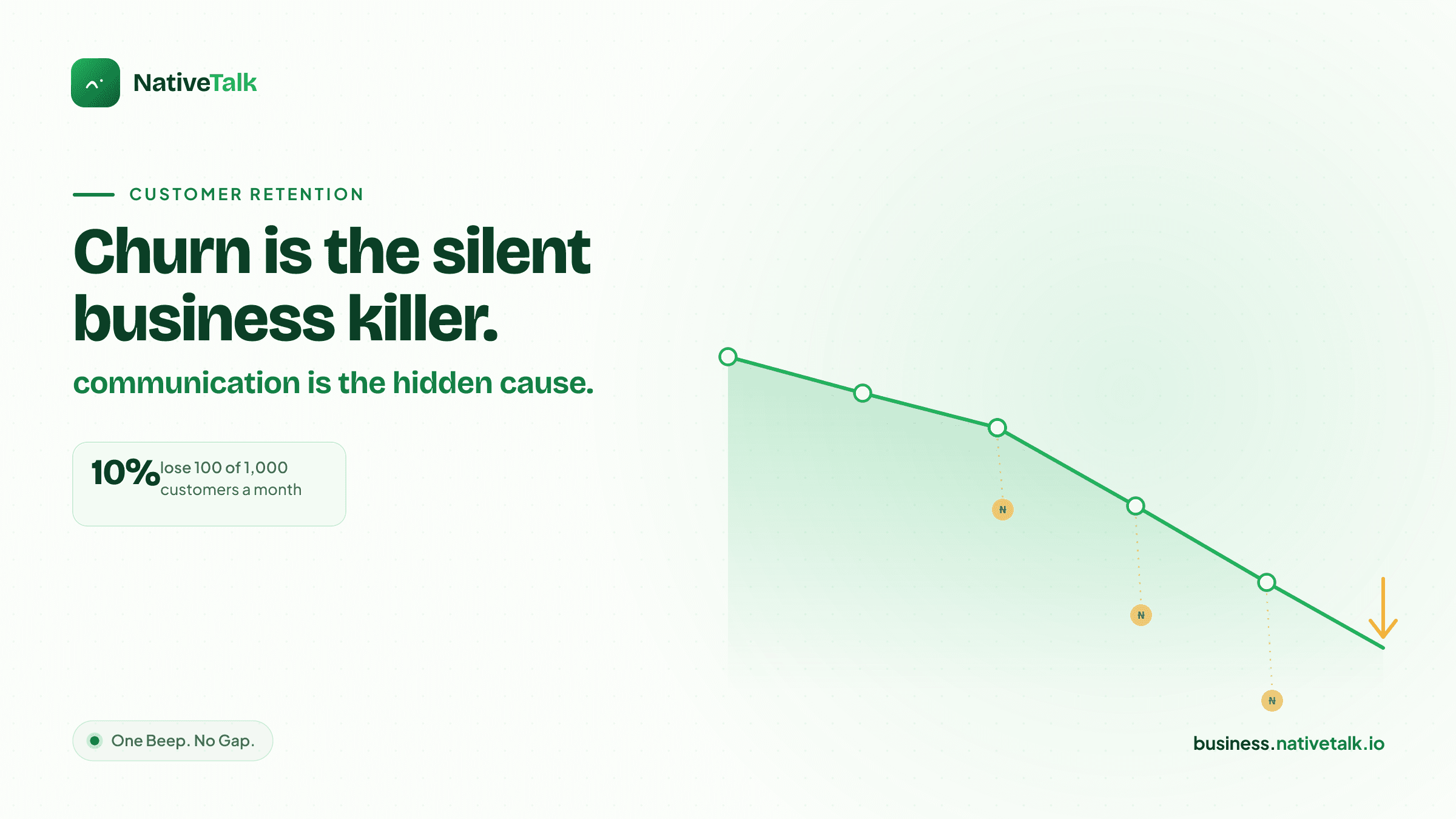
Every business obsesses over acquiring new customers. Marketing generates leads, sales closes deals, and significant resources go into advertising and growth campaigns.
Yet many companies overlook one of the most critical metrics determining long-term profitability: customer churn.
You can bring in hundreds of new customers every month and still struggle to grow or even shrink if your existing customers keep leaving. Customer churn is a clear indicator of satisfaction, service quality, operational health, and overall business strength. Reducing it has become a top priority for sustainable success.
What Is Customer Churn?
Customer churn (also called customer attrition) is the percentage of customers who stop doing business with your company over a given period.
Simple formula:
Customer Churn Rate = (Number of Customers Lost ÷ Total Customers at Start of Period) × 100
For example, if you start the month with 1,000 customers and lose 100, your churn rate is 10%.
While the math is simple, the impact is profound. High churn signals deeper issues in service, communication, product experience, or relationship management.
Why Customer Churn Is a Silent Business Killer
Many leaders underestimate churn because new customer wins feel more exciting. But the costs are real and compounding:
- Revenue Leakage: Every lost customer means immediate lost revenue, especially damaging for subscription or recurring-service businesses.
- Rising Acquisition Costs: You must spend more to replace customers you already worked hard to win, creating an expensive, unsustainable cycle.
- Lower Customer Lifetime Value (CLV): Shorter relationships mean less total revenue per customer. Even small retention improvements can dramatically boost profitability.
- Reputation Damage: Unhappy customers share negative experiences, hurting brand perception and making future acquisition harder.
The Most Common Causes of Customer Churn
Churn rarely stems from one dramatic event. It usually results from accumulated frustrations:
- Poor Customer Service: Slow responses, unresolved issues, and a lack of accountability.
- Fragmented Communication: Customers get inconsistent information because conversations happen across WhatsApp, email, phone, and social media with no central record.
- Lack of Personalization: Customers feel like strangers because teams lack access to history, preferences, and past interactions.
- Slow Issue Resolution: Delays in fixing problems erode trust.
- Inconsistent Experience: Different departments deliver conflicting service levels.
Why Communication Is Often the Hidden Driver of Churn
Many businesses blame product issues for customer loss. In reality, communication breakdowns are frequently the real culprit.
Imagine a customer reaching out via WhatsApp, then getting escalated to email, followed up by phone, and later contacted on social media. With no unified view, the customer repeats their story, responses are delayed, and frustration builds. Eventually, they leave — not because of the product, but because the experience felt chaotic.
How CRM Systems Help Reduce Customer Churn
A strong Customer Relationship Management (CRM) system turns reactive support into proactive retention by centralizing customer data and interactions.
Effective CRMs enable businesses to:
- Track complete communication history
- Monitor support tickets and follow-ups
- Identify at-risk customers early
- Ensure consistent, personalized service
- Improve team accountability
How NativeTalk Helps Businesses Win at Retention
Most CRMs focus on contacts and pipelines, but still leave communication fragmented. NativeTalk was built differently; it combines powerful CRM capabilities with unified business communication.
Instead of juggling multiple platforms, NativeTalk brings customer calls, WhatsApp messages, emails, internal collaboration, and support records into one seamless environment.
